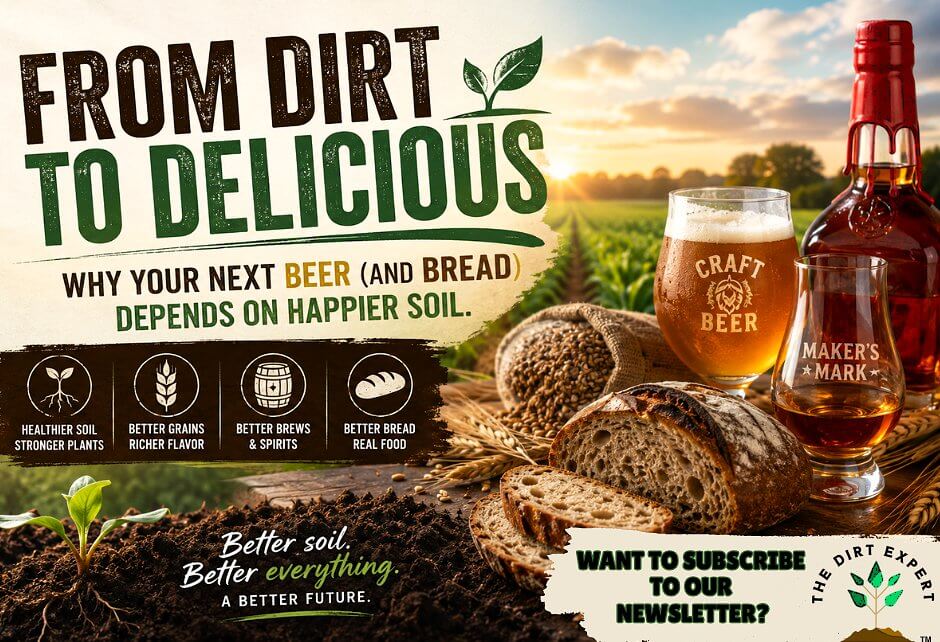
Let's talk about dirt. Not exactly the sexiest topic, right? But stick with me here, because what's happening in the soil beneath our feet is about to make your morning croissant taste better and your evening bourbon pack more punch.
The Pre-Dawn Grain Revolution
Picture this: It's barely 5 a.m. on a drizzly October morning in Washington D.C., and while most of us are hitting the snooze button for the third time, something magical is happening at Seylou Bakery. A 700-pound granite millstone—yeah, you read that right, 700 pounds—whirs to life, ready to grind fresh wheat that was literally growing in nearby fields just weeks ago.
The bakers are dumping in sacks of grain with names that sound like they belong in a fantasy novel: greenish rye, rosy Rouge de Bordeaux, brown redeemer, and golden einkorn. The result? Flour that actually smells like something other than, well, flour.
"When flour is fresh, it's like fresh produce," says Jonathan Bethony, who opened Seylou back in 2017. He's talking about flour with oils, vitamins, colors, and aromas—basically everything that's been stripped out of that sad bag of white flour sitting in your pantry since 2023.
Why Your Grocery Store Flour Is Living a Lie
Here's the thing most of us don't think about: conventional flour is like the Wonder Bread of ingredients. It's been processed, bleached, and stripped down until it's basically just white dust that happens to make dough rise.
The farmers growing grain for Seylou are doing something radically different—and radically old-school. They rotate crops. They plant cover crops like rye, buckwheat, and clovers between growing seasons. They don't till the living daylights out of their soil. Basically, they're treating dirt like the living ecosystem it actually is.
And here's where it gets interesting for those of us in the soil screening business: healthy soil means better everything. Better plants, better grains, better food, and yes—better profits for farmers willing to make the switch.
The Whiskey Whisperers of Kentucky
Now, you might be thinking, "Okay, fancy bread is cool and all, but does this regenerative farming thing actually work?"
Enter Maker's Mark, the bourbon folks with the iconic red wax. About ten years ago, they planted wheat all over Kentucky using different farming methods—from conventional chemical-heavy approaches to full-on regenerative techniques with cover crops and minimal tilling.
Then they did what any good distillery would do: they turned it all into whiskey and had a taste test.
Blake Layfield, Maker's Mark's master distiller, said the regeneratively farmed grains produced whiskey with "a much more complex, deep and rich flavor profile." The whiskey lingered longer, carried more layers of flavor, and had an aroma that literally "punched him in the nose."
Now that's what we call soil quality making a difference.
From Farm to Glass (and Everything In Between)
The movement is spreading faster than gossip at a farmer's market. Craft breweries like Carver Brewing in Durango, Colorado, are sourcing local barley grown within 100 miles. Their head brewer describes the local hops as carrying "big pine and citrus" flavors with a hint of dried cherry that he can't find anywhere else.
"This is what Colorado tastes like," he said. And honestly? That's pretty cool.
But here's the million-dollar question: Why should farmers take the risk? Transitioning to regenerative farming isn't like flipping a light switch. You've got to invest in cover crop seeds, experiment with new rotation strategies, and potentially give up tilling practices you've relied on for decades.
The Seylou Experience: Where Weird Becomes Wonderful
Back at Seylou, the menu reads like a vegetable garden crashed into a bakery. Sourdough whole-grain croissants. Deep-brown rye cookies. Beet danishes sitting next to turnip-and-tomato-sauce monkey bread.
On that drizzly October morning, Mark Ostrau stood outside in the rain for 20 minutes before the doors opened, just to get his hands on a leek, jalapeño, and cheddar scone.
"I never miss a chance to come in here," he said. "You get things here you don't get anywhere else."
That's the power of soil-first farming. It doesn't just produce food—it produces experiences.
What This Means for the Soil Industry (Yeah, That's Us)
Here at EZ-Screen, we're in the business of soil—screening it, sorting it, making it work harder and smarter for the people who use it. And this regenerative farming movement? It's music to our ears.
Because when farmers start treating soil as a living, valuable resource rather than just dirt to dump chemicals on, they need equipment that can help them manage that soil properly. They need to screen compost. Sort topsoil with a topsoil screener. Separate materials efficiently with a dirt screener.
Whether you're a farmer transitioning to regenerative practices, a landscaper working with organic materials, or a contractor who needs a soil screener to separate good soil from rocks and debris, the message is the same: what you put back into the soil matters just as much as what you take out.
The Bottom Line
So what's the takeaway here?
Better soil = better grains = better bread, beer, and bourbon. It's that simple—and that complicated.
Farmers who embrace regenerative practices are taking a financial risk, but they're being rewarded by distilleries, breweries, and bakeries willing to pay more for ingredients that actually taste like something. Consumers are voting with their wallets, choosing products that are healthier, more flavorful, and better for the planet.
And for those of us in the soil business? This is our moment. Because whether you're screening topsoil with a portable topsoil screener for a regenerative farm, processing compost for organic gardeners, or separating materials for any number of earth-friendly projects, you're part of a bigger movement.
A movement that says soil isn't just dirt—it's the foundation of everything we eat, drink, and grow.





Leave a Reply