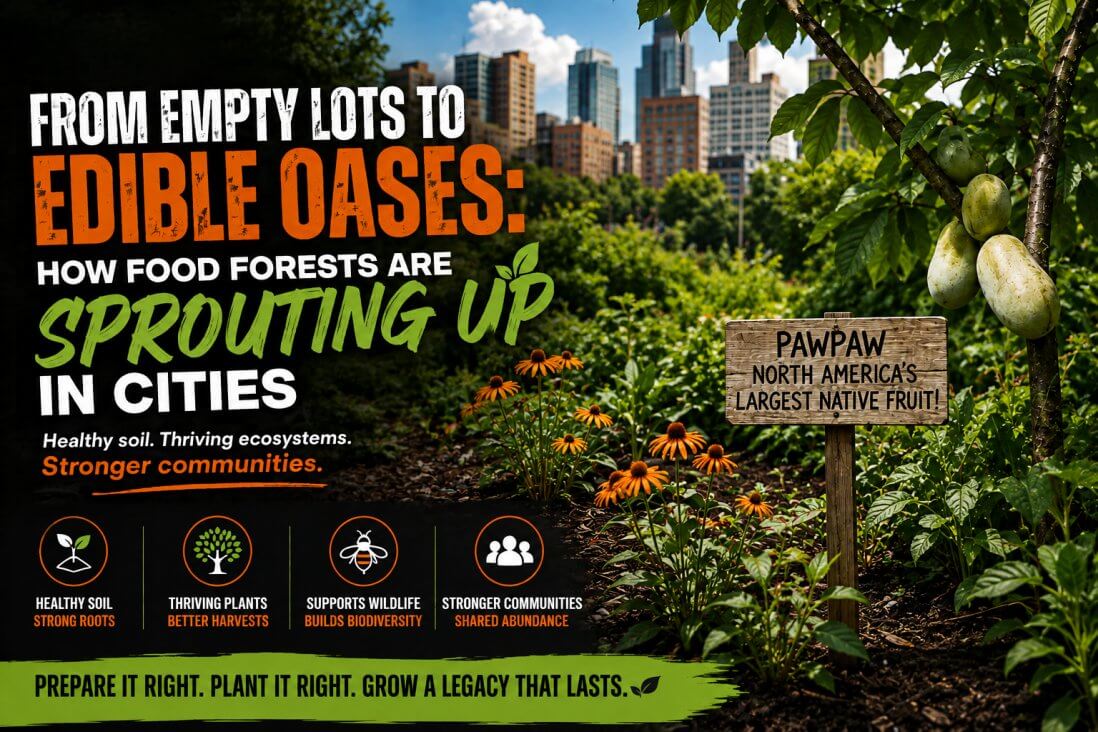
Picture this: You're walking through downtown Hyattsville, Maryland, expecting to see another vacant lot filled with weeds and old tire fragments. Instead, you stumble into what looks like a secret garden where pawpaw trees are dropping North America's largest native fruit right into your hands.
Welcome to the wonderful world of urban food forests – and trust me, they're way cooler than they sound.
What's All the Fuss About Food Forests?
Unlike your typical community garden with its neat little rows of tomatoes and lettuce, food forests are designed to mimic actual forest ecosystems. We're talking multiple layers of edible plants: towering nut trees creating a canopy, fruit trees forming the understory, berry bushes filling the middle ground, and herbs carpeting the forest floor.
Dawn Taft, Hyattsville's environmental programs manager, puts it perfectly: "When you live in a city, you sometimes don't get to experience the forest." These edible oases are changing that, one pawpaw at a time.
But here's the thing – and this is where us dirt nerds get excited – none of this magic happens without proper soil preparation.
The Foundation of Every Great Food Forest: Quality Soil
Lincoln Smith, the mastermind behind a 10-acre experimental forest garden in Bowie, Maryland, learned this lesson the hard way. His property used to be a cornfield, which sounds promising until you realize that decades of monoculture farming can leave soil compacted, depleted, and about as nutritious as cardboard.
"You're targeting different crops and trying to balance ecosystem restoration and food production," Smith explains. But you can't balance anything if your soil is junk.
This is where topsoil screeners and dirt screeners become your best friend. Before Smith could plant his first persimmon tree or native Chickasaw plum, he needed to transform that tired cornfield soil into something that could actually support a thriving ecosystem.
The Dirty Truth About Urban Soil Challenges
Starting a food forest in the city comes with unique challenges. Empty lots often contain:
Construction debris mixed with soil
Compacted earth from heavy machinery
Contaminated fill dirt
Rocks, concrete chunks, and other unwanted "surprises"
I once talked to a community organizer in Philadelphia who thought he'd hit the jackpot when the city donated "topsoil" for their food forest project. Turns out, it was more like "top-soil-plus-broken-glass-concrete-chunks-and-mystery-metal-pieces." They spent three weekends hand-picking debris before realizing they needed professional soil screening equipment.
That's three weekends they could have spent actually planting trees instead of playing "What's That Sharp Thing in My Soil?"
Why Proper Soil Screening Makes or Breaks Your Project
When you're establishing a food forest, you're not just planting for this season – you're creating an ecosystem that needs to thrive for decades. Quality soil preparation upfront saves massive headaches later.
Portable topsoil screeners excel at:
Removing rocks and debris that can damage young root systems
Creating consistent soil texture for better water infiltration
Separating organic matter that can be composted separately
Producing clean fill for pathways and planting areas
Smith's Bowie forest is now a carbon-sequestering, water-quality-improving powerhouse. But it started with getting the soil foundation right.
The Real-World Benefits Are Pretty Amazing
The Emerson Street Food Forest in Hyattsville is proof that proper soil prep pays off. Visitors like Alden Kendall bring their kids to sample beach plums and sea kale, while Lisa Nelson hunts for figs among the well-established trees.
But my favorite detail? Taft mentions that she's "not seeing rotten fruit on the ground" – evidence that people are actually using the space. When fruit trees are healthy and productive, communities notice.
The wildlife benefits are impressive too. Butterflies, bees, and birds have moved in, creating a thriving ecosystem that started with good soil management.
The Maintenance Reality Check
Here's where Smith keeps it real: "There's been a certain amount of people online claiming zero maintenance, which is totally wrong."
Even harvesting is work. Processing acorns takes 10-12 people a couple hours. Picking fox grapes off stems requires "several people more than an hour."
But imagine if you also had to constantly battle poor drainage, stunted plant growth, and soil compaction issues because you skipped proper soil preparation. That "couple hours" of pleasant harvesting work turns into endless frustration.
Getting Your Soil Game Right from the Start
Whether you're planning a massive food forest or just want to improve your backyard growing space, investing in quality soil screening equipment makes sense. You can rent a topsoil screener for smaller projects or, if you're serious about ongoing soil improvement, consider purchasing your own portable soil screener.
The math is pretty simple: spending time upfront to properly screen and prepare your soil means years of healthier plants, better harvests, and way less maintenance headaches.
Ready to Dig Into Your Own Soil Project?
Food forests are sprouting up everywhere because they work. They provide fresh food, support wildlife, improve air and water quality, and give urban communities a chance to reconnect with nature.
But they all start with the same foundation: quality soil preparation.
Whether you're planning an ambitious food forest or just want to turn your backyard clay into growing gold, proper soil screening is your first step toward success. Check out the full line of portable topsoil screeners and find the right screening machine for your project. Because great soil doesn't happen by accident – but with the right equipment, it doesn't have to be backbreaking work either.





Leave a Reply