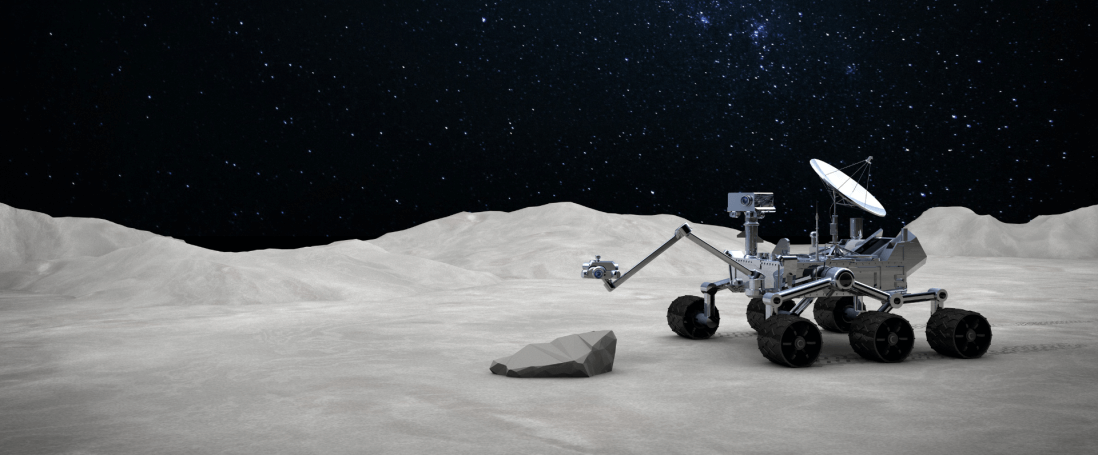
So, you're telling me that dirt- yes, dirt-is now worth $20 million per kilogram? Well, not just any dirt. We're talking about lunar soil, aka moon dust, and the precious cargo it's been hoarding for billions of years: Helium-3.
Before you start eyeing your backyard with dollar signs in your eyes, let me clarify: your topsoil isn't going to fund your retirement. But the Moon's? That's a whole different ball game.
The Moon's Billion-Year Piggy Bank
Here's the cosmic scoop: while Earth's magnetic field has been heroically deflecting solar wind like an invisible superhero cape (protecting our power grids and satellites), the Moon has been sitting there completely naked-no magnetic field, no atmosphere, nothing. For billions of years, it's been getting pelted by solar wind loaded with Helium-3, which has been accumulating in the lunar regolith (fancy word for moon dirt).
The result? The Moon is basically sitting on a fortune of a material that's 150 times more valuable than gold. Not too shabby for a big, dusty rock!
Why Everyone's Suddenly Obsessed with Moon Dirt
Helium-3 isn't just expensive for bragging rights. This stuff has some seriously cool applications:
Fusion power plants of the future (clean energy, anyone?)
Quantum computers that need to be cooled to near absolute zero (we're talking chandelier-like refrigerators-yes, really)
National security applications for detecting nuclear material smuggling
On Earth, Helium-3 is rarer than a four-leaf clover in the Sahara. It mainly comes from tritium decay, and tritium itself costs tens of thousands of dollars per gram. The Moon? It's been collecting stuff like free samples at Costco.
Enter the Space Soil Screeners
Now here's where it gets fun for us soil screening enthusiasts! Companies like Interlune (a Seattle startup) aren't just dreaming about lunar Helium-3-they're actually building the technology to harvest it. And guess what's involved? You got it: mechanical processing and screening of soil.
Their four-step lunar soil processing plan looks like this:
- Excavation: Digging up massive amounts of lunar regolith
- Mechanical Processing: Sorting and handling the soil (sound familiar, fellow screener fans?)
- Heating: Releasing the trapped gases
- Gas Separation: Isolating that precious Helium-3
To test their equipment, Interlune built a full-scale prototype excavator. They're testing simulated lunar soil in vacuum chambers and even in parabolic airplanes that recreate lunar gravity. Because, you know, gravity on the Moon is only about 16% of Earth's, and that slightly changes how dirt behaves!
The Automated Moon Farm
Here's the kicker: this whole operation will be completely automated. No humans needed on-site (probably for the best-moon dust is nasty stuff). Instead, operators on Earth will control everything remotely, like the world's most expensive video game.
Interlune prefers to call their process "harvesting" rather than "mining." The goal? Extract the valuable Helium-3, put the soil back in the trench, and leave the lunar surface looking like a freshly tilled field. Respect the Moon, people!
The Timeline and the Stakes
Interlune is aiming big: 10 kilograms of Helium-3 per year from the Moon, which would multiply domestic production by 10x. Their timeline?
Next summer: First Moon trip (hitching a ride with Astrolab)
2027: Second mission
2029: Start delivering Helium-3 to customers
They've already got deals with companies like Blue Fors and Maybel, who need He-3 for cooling quantum computers. This isn't pie-in-the-sky dreaming-this is happening!
The New Space Race is On
But Interlune isn't alone in this lunar gold rush:
China has already returned Helium-3 samples and plans more missions
Japan's iSpace is also pursuing He-3 extraction
Multiple companies are eyeing other lunar resources like water (for rocket propellant) and rare earth metals
Thanks to the Space Resources Act of 2015, U.S. companies can legally extract and sell lunar resources. But there's a catch: if the U.S. doesn't move fast enough, other countries might stake their claims first. It's the Wild West, but in space!
Back Down to Earth (Where We Operate)
Now, while all this moon harvesting sounds absolutely incredible, we at EZ-Screen are keeping our feet (and our screeners) firmly planted on Earth. We specialize in portable soil screeners that handle the dirt you can actually touch-topsoil, gravel, compost, sand, aggregate, you name it.
Our topsoil screeners might not be processing $20 million per kilogram material, but they're doing something just as important: helping you recycle materials, save money, and boost productivity right here on terra firma.
The Takeaway
The lunar soil processing industry is proving that mechanical screening technology-whether on Earth or the Moon-is fundamental to resource extraction and material separation. The principles are the same: excavate, process, separate, and make something valuable from raw material.
While companies are racing to harvest Helium-3 from the Moon, we're here helping contractors, landscapers, municipalities, and golf courses screen their materials efficiently and profitably. Different scale, different location, same core technology.
And honestly? We'll take screening topsoil under blue skies over operating robots in the vacuum of space any day. Though we admit, that $20 million per kilogram price tag does make us look at dirt a little differently!





Leave a Reply